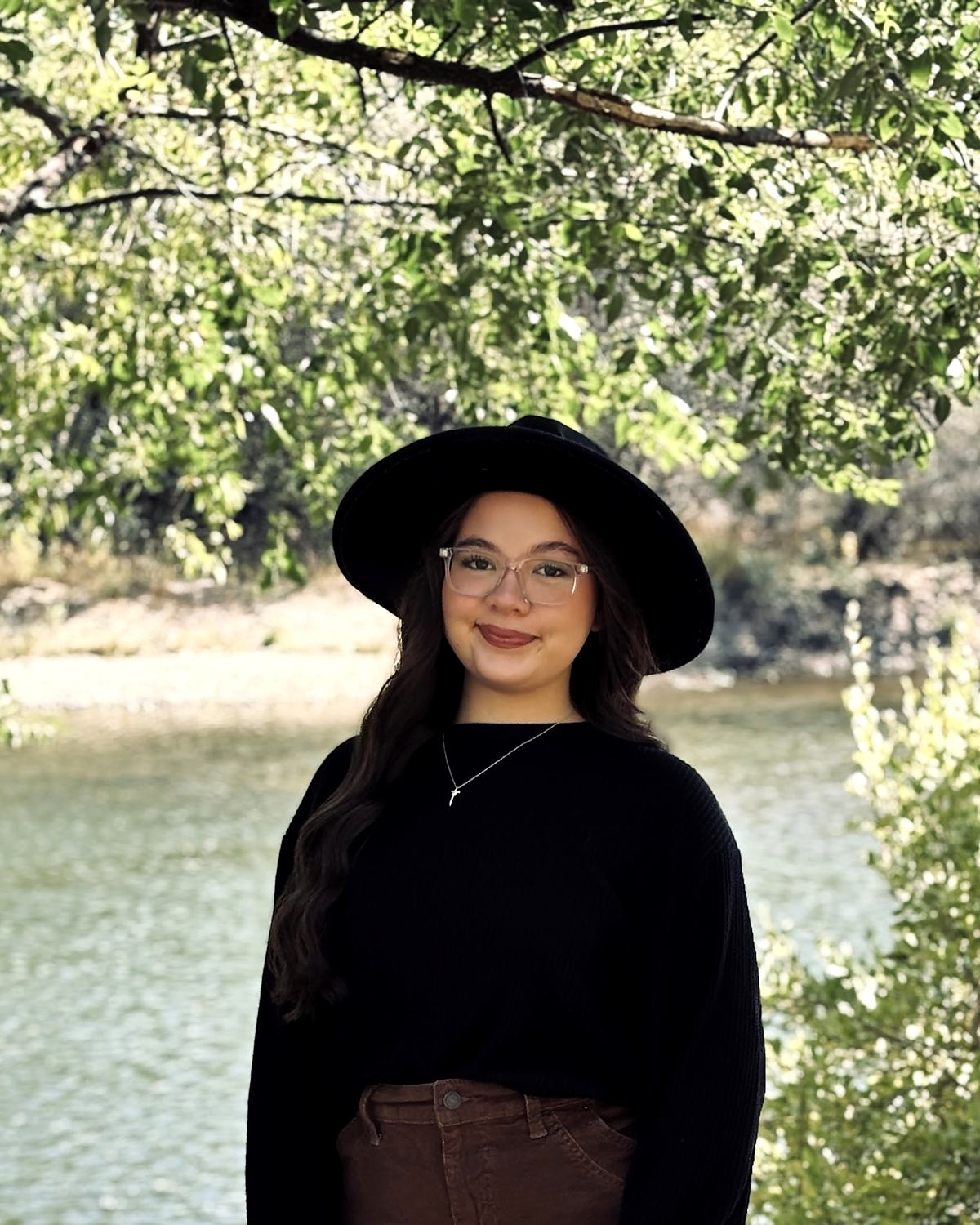
Anna Escobedo Cabral made history as the first Latina to serve as Treasurer of the United States, her signature appearing on American currency from 2004 to 2009. Her path to that role was built through decades of advocacy work. From championing Latino representation in Fortune 500 companies to expanding Hispanic stories at the Smithsonian Institution.
Before her federal appointment, Cabral served as CEO of the Hispanic Association on Corporate Responsibility and director of the Smithsonian’s Center for Latino Initiatives. Her government service began in the U.S. Senate, where she worked for eight years as Deputy Staff Director for the Judiciary Committee and managed the Republican Conference Task Force on Hispanic Affairs.
Recently, Cabral spoke about her work as she prepares to visit Colorado State University Pueblo, a Hispanic Serving Institution for a day interacting with students and alumni.
What drew you to advocacy work with the Hispanic Association on Corporate Responsibility, and how did you approach convincing Fortune 500 companies to expand their Hispanic representation?
I had been working in the federal government for a very long time. I loved what I was doing for the United States Senate, but you do so much at the federal, national level and you never sort of see the end result. What I loved about going to work at HACR was we were making a financial and economic argument for why corporations needed to invest more in the Latino community, and they were doing it in four areas: governance, employment, philanthropy, and procurement.
It actually worked out very well. We built on a very strong foundation and expanded the number of corporations that were interacting with us. We increased the number of individuals from the Latino community that were serving on corporate boards. We helped spur the creation of a Latino Corporate Directors Association. We saw increases in employment of Latinos and their promotion in employment ranks. We saw increases in dollars going to our community through their nonprofit and investment arms. And we saw large increases in procurement opportunities for Latinos.
It was one of my favorite jobs because you got to make a strong argument for why it was good for them to make a greater investment. It’s a growing part of the US population. It’s pretty easy to make a market case argument.

During your time at the Smithsonian’s Center for Latino Initiatives, what was your approach to addressing the gaps in Latino representation?
By the time I became director, they had developed a system for trying to increase the presence of Latinos in all of the Smithsonian institutions. People talk about the Smithsonian, but they don’t realize it’s not one institution. It’s 19 different museums and research centers. They had the commitment to try to do something, but the problem was the scope and size of the organization.
We took the money that we had and basically said, instead of giving you money to make a short-term exhibition, what we’d like to see you do instead is increase your hires and give us a plan of action for how you’re going to make substantive, long-term change so that this progress will continue. We wanted to sign an MOU with each institution.
The 19 museums were invited to give us a plan of action, tell us how they were going to spend the money that we could grant them to make more permanent, lasting change. We started to see some of these museums take ownership instead of just being handed a few dollars for a temporary exhibit. We started to see permanent change happen in their employment and in the nature of their exhibitions, whether they were traveling or permanent.
What does it mean to you to be speaking at a Hispanic Serving Institution during Hispanic Heritage Month?
It’s really exciting for me to visit an HSI. One of the first things I worked on when I went to work for Senator Orrin Hatch as executive staff director for the United States Senate Republican Conference on Hispanic Affairs was trying to get an appropriation for Hispanic serving institutions. There had never been one. Even though there was an authorization, they had never given any money to those institutions to fund their work. So for me, it is really exciting. I’ve been a huge supporter of HSIs for as long as I learned about their existence.
I’m a Californian, and when I was in college, there were very, very few Latinos going to college. In the University of California system, there was a report done called the Task Force on Hispanic Students. They discovered that there were very few Latinos in the UC system because there was very little work being done to feed them through the traditional channels to take the right classes, take the tests, and understand the opportunities existed.
Today, there are such large numbers of Hispanic serving institutions, both public and private, in California because the population of Latinos at those institutions has mushroomed. You have to have at least 25% of your student body be Latino, which means that Latinos are now going to college in much larger numbers. That’s what I love about HSIs: they are dedicated to serving Latino students who are finally now enrolling and matriculating and getting prepared for the future.
Many HSI students are first-generation college students from families where government careers might seem out of reach. What would you want them to know about federal service?
I would say that the federal government is a very attractive opportunity for Latinos, especially first-generation Latinos. I was a first-generation Latina who had the opportunity to go to work in the federal government, and I believe that it’s one way I was able to give back. I was lucky to go to college because a math teacher took a special interest in me and convinced me to apply. No one in my family had graduated high school. So for me to go to college was a big deal. For me to graduate high school was a big deal.
Going off to college, I began to become aware of so many opportunities that I didn’t know existed because nobody in my neighborhood, nobody in my family had been exposed to those opportunities. Once I learned that they existed, I wanted to use the system to make life better for all of the Latinos still in those neighborhoods who still hadn’t had anybody open the door for them.
Latinos are still woefully underrepresented in federal service relative to the percentage of the population living in the United States. As we look to the future, we’re going to be a natural community to draw from because we are now getting more educated and successful.
The federal government is an opportunity to give back and earn a decent living. You may not become a millionaire, but you will do well. The retirement benefits are excellent. The health and other benefits are also excellent. It doesn’t mean you have to work there for 40 or 50 years. You can learn a lot if that’s one of your early jobs, and if you enjoy it, you can move up that system fairly successfully because if you work hard, there’s lots of opportunity.
For students who want to make a difference in their communities, what advice would you give about building coalition-building skills?
I grew up in neighborhoods that were always the same. We moved a lot. I went to at least 20 different elementary schools, three junior highs, and one high school for two years. Even with all those moves in California, we were always in the same kind of neighborhoods because that’s all we could afford. Usually black and brown people living in very poor pockets in the cities. There was not a lot of exposure to other people, other ideas.
When I got to college, I expanded my circle, and at first it was a little frightening because now it’s the first time I’m really interacting with people who were not Latino or African American. I began to realize there are very few differences and a lot of common themes in our families, even though we may not be of the same race or ethnicity. If you look for that common ground, then you have a much greater opportunity of succeeding when you want to try to make change because you can interact with somebody in a way that helps them hear you.
Building coalitions, building consensus is critically important. When I went to the East Coast, first to study at Harvard, then to work in Washington DC in the Senate, I began to realize that even within Latino communities, there’s such diversity of experience, history, opportunity. Even within our language, there are different words, different ways in which we construct phrases.
If you can make connections to people on that most basic level around things that we all care about, like where our kids go to school, how they’re going to succeed, what kind of careers they’re going to pursue, that positions you to make a difference in what you’re advocating for. I would encourage people to hone those skills very early in life.