
By Coleman Cornelius | Photography by Matthew Staver |
First published Sept. 23, 2025 in State, the magazine of the Colorado State University System
One group of students is studying a problematic respiratory disease in the threatened Mojave desert tortoise.
Another is investigating the use of recycled plastic in asphalt.
A different group is analyzing why the Black Lives Matter protest spread to some U.S. cities and not others.
Yet another is exploring whether education and resources reduce the incidence of depression and suicide among high schoolers.
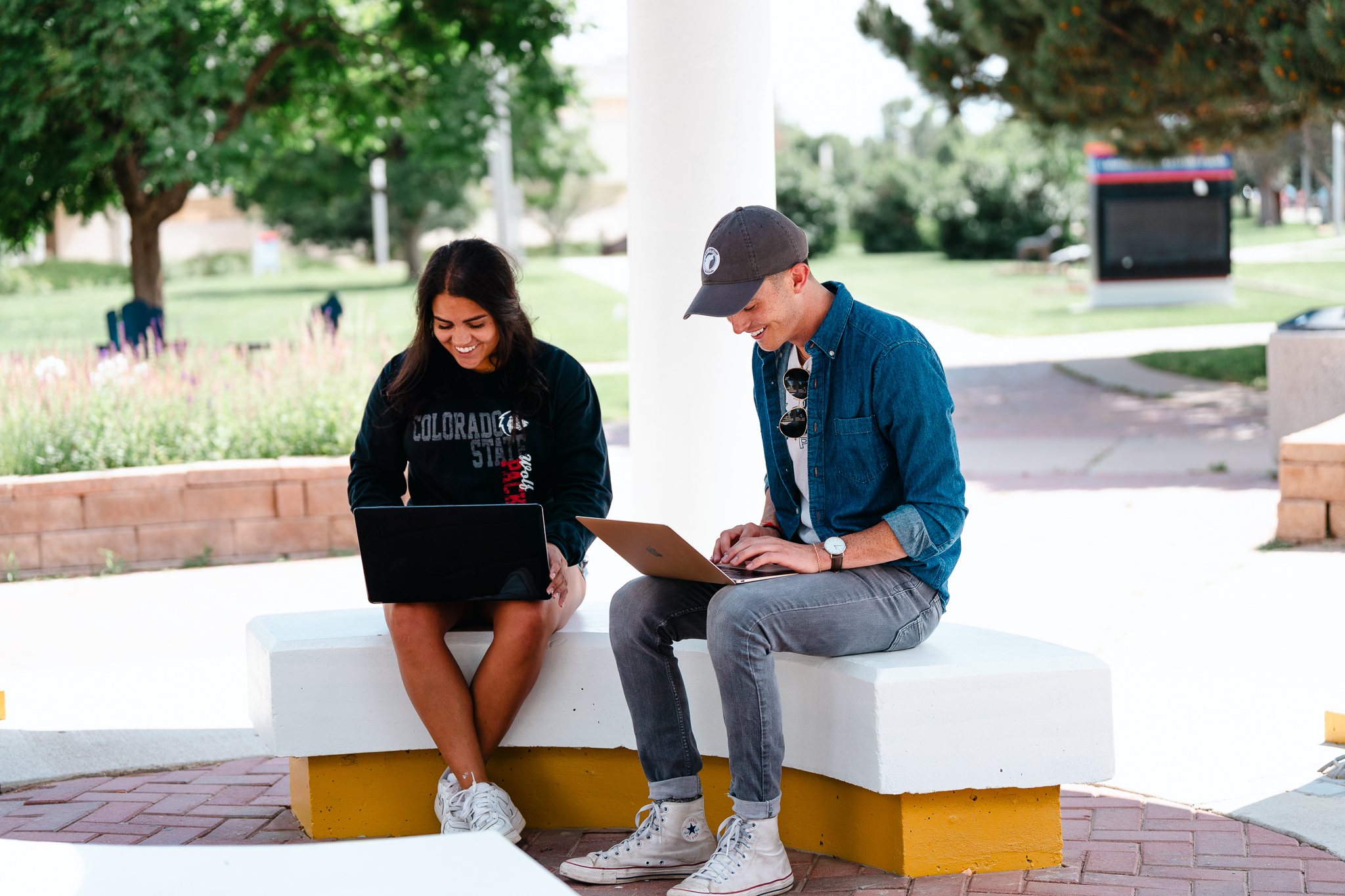
Undergraduate students at CSU Pueblo have a wide range of hands-on research opportunities, from fundamental to applied science. And although CSU Pueblo is a regional comprehensive university – meaning it focuses on teaching that prepares students for the regional workforce – the school’s leaders and faculty increasingly view student research experiences as central to the instructional mission.
“Our faculty proudly embrace the teacher-scholar model. They are truly dedicated to students and incorporating them into research and scholarship from day one,” said Gail Mackin, CSU Pueblo’s provost and executive vice president of academic affairs.


In fact, two recent designations highlighting university research and student access and success reflect CSU Pueblo’s focus on research as an important aspect of teaching and educational outcomes. Those designations came from the Carnegie Classification of Institutions of Higher Education, the leading framework for recognizing and describing the work of institutions within U.S. higher education. CSU Pueblo was one of only 33 institutions nationwide that earned both Research Colleges and Universities and Opportunity Colleges and Universities designations in the 2025 Carnegie Classifications.
Research underpins teaching as new knowledge is transferred directly from scientists and scholars to students in the classroom, said David Lehmpuhl, dean of CSU Pueblo’s College of Science, Technology, Engineering, and Math. Research activities also help students understand applications of their course work, he noted.
“It’s a way students can help advance the frontiers of knowledge, while better preparing them for careers and demonstrating how their disciplines impact the community and the world,” Lehmpuhl said.