The artificial intelligence revolution has arrived in higher education, and CSU Pueblo faculty are grappling with a fundamental question: How do you maintain academic integrity when students have access to increasingly sophisticated AI tools?
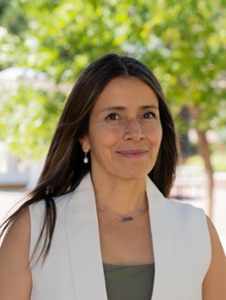
That challenge brought Melody Denny from St. Lawrence University to CSU Pueblo’s General Classroom Building on Thursday, where she presented a counterintuitive solution to those in attendance rin GCB 111. Rather than fighting the technology, she argued, educators should adapt their teaching methods to work alongside it.
“We can’t AI-proof something,” declared Denny, director of the Word Studio and Peer Tutoring Program at St. Lawrence University. “But we can integrity-proof it through sound pedagogy.”
The professional development session, organized with support from Provost Gail Mackin and the English Department, drew faculty from across campus wrestling with the reality that their students are using generative AI whether they like it or not. Denny’s data painted the picture starkly. A usage graph for ChatGPT showed a dramatic summer drop-off, evidence of heavy student use during the academic year.
But Denny’s most provocative claim wasn’t about student behavior. It was about faculty response. AI detection software, she argued, should be abandoned entirely.
“The answer is none,” she said when asked which AI detection program she recommended. “They are wildly inaccurate.”
The numbers back her up. One major detection tool identified only 26% of AI-generated text while falsely flagging 9% of human writing. Worse, the technology creates equity issues, disproportionately flagging work by non-native English speakers and students using free AI versions rather than premium services.
“Students who can’t afford the $20 a month are more likely to be disadvantaged,” Denny explained, highlighting how economic factors compound the unreliability problem.
Instead of technological solutions, Denny advocated for three core pedagogical strategies that writing studies has championed for decades, now made newly urgent by AI’s capabilities.
Redesigning Tasks That Matter
The first strategy requires faculty to audit their assignments. Can AI complete the task without the student engaging in actual learning? If so, the assignment needs revision.
“We want to go from AI-easy tasks to more human-centered tasks,” Denny said, pointing to the difference between asking students to summarize readings versus asking them to connect course material to personal experiences or defend positions using class-specific content.
She referenced a controversial framework from recent AI pedagogy literature: “AI work is C-level work, but it’s the new F. If AI can do it, that’s the starting point for F. Anything above that has to have human addition to it.”
Process Over Product
The second strategy shifts focus from final papers to the work students do along the way. Scaffolding assignments with drafts, conferences, and reflection points makes outsourcing more difficult and provides windows into authentic student thinking.
“If you’re just looking at the final thing, that eight to 10 to 15-page research paper that’s 30% of the course is easily outsourced,” Denny warned.
This approach requires sacrifice. Faculty must give up some content coverage and class time. But the benefits extend beyond catching cheaters. When professors see student work at multiple stages, they build relationships that research shows reduces academic dishonesty.
Radical Transparency
The third strategy demands clarity about why assignments exist and how they connect to learning outcomes. Students need to understand not just what they’re doing, but why the struggle matters.
“The ease with which AI can think for us changes the equation,” Denny said. “We need to clarify further what we want students to learn.”
This transparency extends to AI policies themselves. Rather than blanket prohibitions, Denny advocates for thoughtful statements that explain the pedagogical reasoning behind decisions about AI use.
Real-World Complications
The question-and-answer session revealed the practical challenges faculty face. Kevin Van Winkle, who teaches rhetoric, raised concerns about workload, noting that five-minute conferences with 100 students would require eight hours of additional time per semester.
Denny acknowledged the reality: “Money is a thing, and I get it.” But she pointed to professional writing organizations that recommend 20 students per class and three courses per semester as ideal conditions for meaningful engagement.
Dean Kristine Morris from the School of Nursing raised a different concern. The National League of Nursing had just released a vision statement calling for AI competencies in nursing education, signaling a shift from preventing AI use to teaching ethical application.
“How do I shift my faculty from thinking about stopping AI use to measuring student competencies in AI?” Morris asked.
Denny suggested starting with existing critical reading skills, emphasizing that nursing students will need to evaluate AI outputs for accuracy in high-stakes medical decisions.
Perhaps the most revealing exchange came from Lee Miller, a retired teacher returning to school as a freshman who wanted to use AI as a learning tool. The interaction highlighted a generational divide, with faculty focused on preventing misuse while students sought guidance on productive applications.
“I want to know how to use it as a tool to learn more and faster,” Miller said, representing a perspective that challenged traditional assumptions about student motivations.
The Accessibility Question
An adjunct professor raised concerns about AI’s role as both accessibility tool and potential trap, noting how companies create powerful assistive technologies while designing platforms to maximize engagement and profit.
“They don’t care about accessibility. They care about money,” Denny responded, acknowledging the ethical complexity educators face.
Starting Small
Recognizing faculty overwhelm, Denny concluded with modest recommendations. For spring semester: audit one learning outcome for validity, add one process checkpoint to a major assignment, conduct some work in class to observe student thinking, and update one syllabus statement.
“You already know how to do this,” she reminded the audience. “You’re already good teachers. You already know good pedagogy. I’m just trying to remind you that you know these things, but also that you can’t wait.”
Her final warning carried particular weight, quoting AI researcher Ethan Mollick: “This is the worst AI you’re ever going to use. The one you’re using today is now the worst because it’s only continuing to get better through machine learning.”
As faculty filed out of the classroom, the challenge was clear. The technology won’t pause for higher education to catch up. The question isn’t whether students will use AI, but whether faculty can adapt their teaching fast enough to maintain educational integrity in an age of artificial intelligence.