CSU Pueblo Responds: How a Community Rallied When Wildfire Came Close to Home
Carol Rickman noticed something odd that morning. At 6:30 a.m. on June 29, she checked her phone and saw the Aspen Acres Fire was listed at two acres. She went for a swim. Her husband, Mark, headed out for a run. By 8:30 a.m., the fire had grown to 200 acres. By 9 a.m., it was 2,000.
“We never thought it would jump over 12 Mile Road,” Carol said as she drank her morning coffee. She and Mark live in El Camino, about 25 minutes from Beulah, the foothills area where the fire would eventually consume more than 96,000 acres and rank as the seventh-largest wildfire in Colorado’s recorded history.
Half an hour after hitting 2,000 acres, evacuations went from pre-evacuation to full. Friends in Beulah who had seemed safe were suddenly packing cars and heading south toward Pueblo. The Rickmans could smell the smoke rolling into the valley. Ash fell like snow on their neighborhood.
Carol graduated from CSU Pueblo in 1983 with a degree in biology and chemistry. She has been back in Pueblo since 1991. These mountains she was watching burn were not a distant tragedy. They were her backyard. Hers and Mark’s. They hiked those trails two or three times a week. Their dog, Rock, CSU Pueblo’s living mascot, had run through Mountain Park countless times.
“It’s very sad to see our state on fire,” Carol said.
What came next, though, showed her something else entirely.
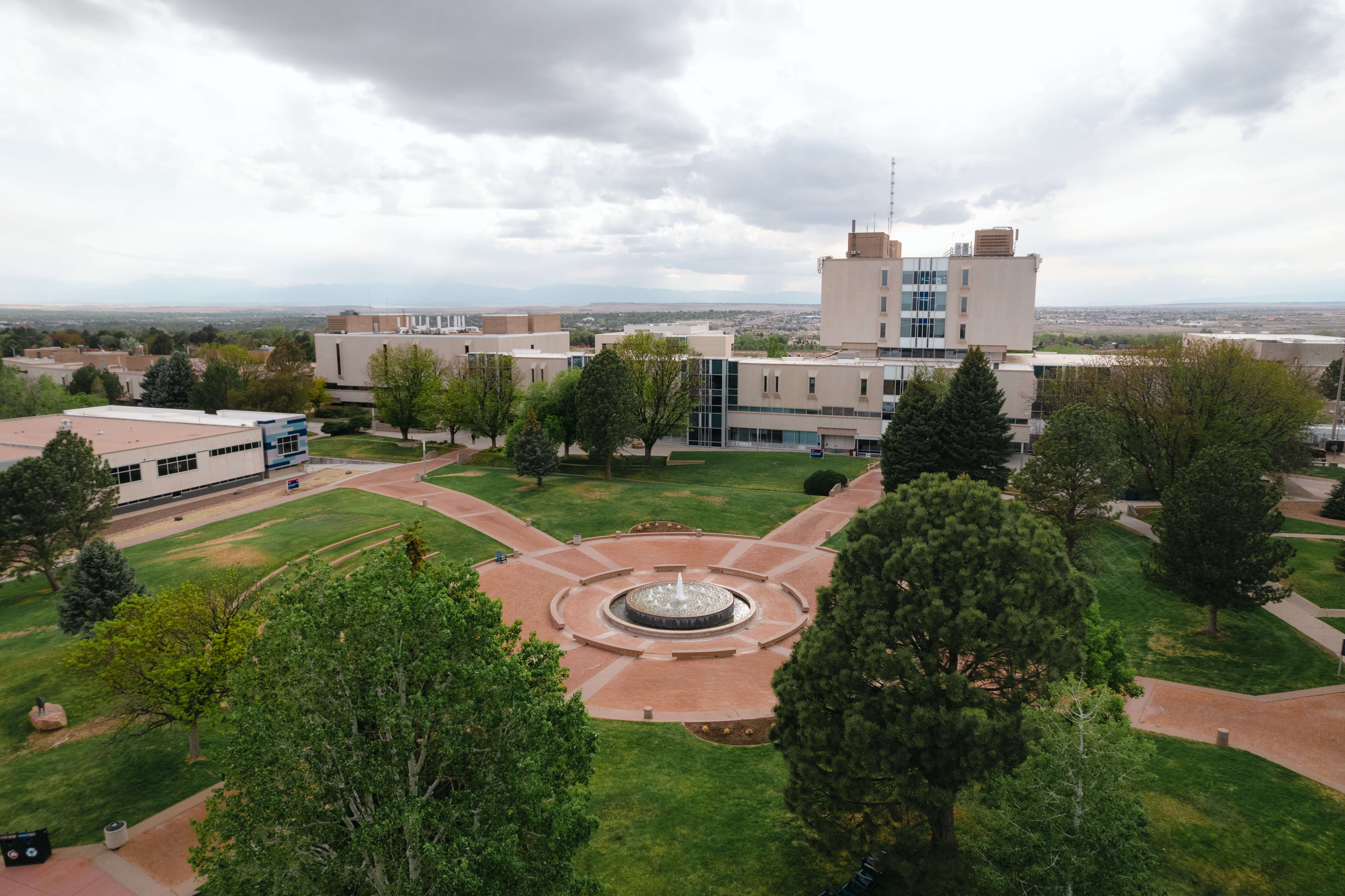
Within days, the university had opened its doors to firefighters and emergency response personnel. More than 1,700 firefighters from 29 states descended on the region to battle the Aspen Acres Fire. Campus became a staging area—a place where crews could rest between shifts battling a fire that refused to slow down.
Parking lots transformed into impromptu bases. Dining facilities operated around the clock. Residence halls housed exhausted men and women who had lost count of the hours they had spent fighting the fire.


Carol walked out to campus and saw what she called a city built for firefighters and their teams. She walked through it with deep pride for her university.
That same community spirit was happening elsewhere, too. At the United Way Distribution Center in the county, where donations were streaming in faster than anyone could process them, Abby Davidson showed up ready to bring order to chaos.
Davidson is the assistant provost for student success at CSU Pueblo and has worked at the university for more than 12 years. She was out of town when the fire started. Her aunt had passed away, and she was in Northern Colorado for the funeral. Within hours of returning to Pueblo, she and her husband, Adam, started texting friends, making calls and watching Facebook for updates.
On Friday, July 4, they drove to the donation center. It had opened just the day before and was still in its beginning stages. Donations were coming in waves. Evacuees, many of them traumatized and not knowing where to start, were walking in needing everything and anything.


Davidson’s specialty is structure. She works in project management and logistics. She saw the need immediately and started organizing. Hygiene items went in one section. Canned goods were arranged like a grocery store aisle. Clothing was organized by size. Shoes were sorted.
The goal was simple: Someone who had lost their home could walk in and shop with some dignity and some sense of control.
The work hit harder than logistics. A mother came through with her teenage daughters. She moved through the donation center hesitantly, picking up items and then putting them back. She felt she was taking too much—that other people needed things more or that she should not be there taking from the pile when her neighbor might need it more.
Davidson talked with her and pointed to the donations still streaming in. She told the mother Pueblo had shown up to support her. She needed to take what she needed—not hold back or ration help meant for her. The mother cried while her daughters waited. Then she filled her cart.
“It completely hits your heart every time,” Davidson said. “The gratitude, but just how devastated they were.”
What struck Davidson most was who was volunteering at the center alongside her. Many of them were evacuees themselves—people whose homes had been destroyed or were still in question. People who had lost nearly everything were now spending their days helping others do the same. Firefighters who did not have homes anymore were out fighting the fire anyway.
“They’re just immediately turning that tragedy into supporting,” Davidson said.
Around Pueblo, the volunteerism kept spreading. The animal rescue center needed people to walk dogs and cats displaced by evacuations. The Rickmans went out and spent afternoons with animals that had lost their homes, offering them some comfort and exercise.
Carol found herself grateful for small things, such as being able to do something. Local businesses opened their doors to evacuees at no cost, including the zoo, the children’s museum and the Pueblo Athletic Club. The city had a list, and everyone seemed to be on it.
Volunteer efforts at the fairgrounds coordinated care for livestock and large animals that residents had managed to evacuate. Those operations required people who understood animals and land and who could work long shifts in the heat, managing hay, water and the stress of animals displaced from familiar territory.
Davidson’s husband, Adam, ran fundraising efforts. He and others organized pop-up events in Pueblo and Colorado Springs, raising more than $4,000 in donations in just two days for United Way and the Red Creek Volunteer Fire District.
“The generosity and the outpouring of love and support,” Davidson said. “I don’t know of any other communities that are like this.”
The Rickmans noticed something else in the aftermath. Wildlife was moving down out of the mountains. They normally see a deer or two. They had seen a couple of bears in a year. In one week following the fire, they counted 10 bears in their neighborhood. Coyotes moved through. The animals were displaced, searching for territory, food and water where they once had habitat.
The fire changed the mountain landscape in ways that will not be undone for years. One hundred ninety-two homes were destroyed. Four commercial buildings were lost. Wind gusts of up to 100 miles per hour pushed flames across critically dry fuels. As of mid-July, county officials had assessed about 67 percent of the 661 properties within the fire perimeter.
But the people who lost those homes were already starting to rebuild. Volunteers were already moving donated items closer to the heart of Pueblo so evacuees could access what they needed more easily. The firefighters kept working. The community kept showing up.
“It’s brought a lot of unity to their communities,” Carol said of the people in Beulah and Colorado City. “It’s amazing how people come together when they need to.”
As of July 28, the final day of firefighter and emergency personnel housing on the CSU Pueblo campus, the university prepared to return those areas to normal use. Parking lots would reopen. Dining facilities would resume their regular schedules. Campus would return to what it had been.
The relationships built during those weeks would remain—the volunteers who discovered what they were capable of and the evacuees who experienced their community standing beside them when everything burned.
Pueblo had shown up. CSU Pueblo had shown up.