State of the University Address
State of the University Address
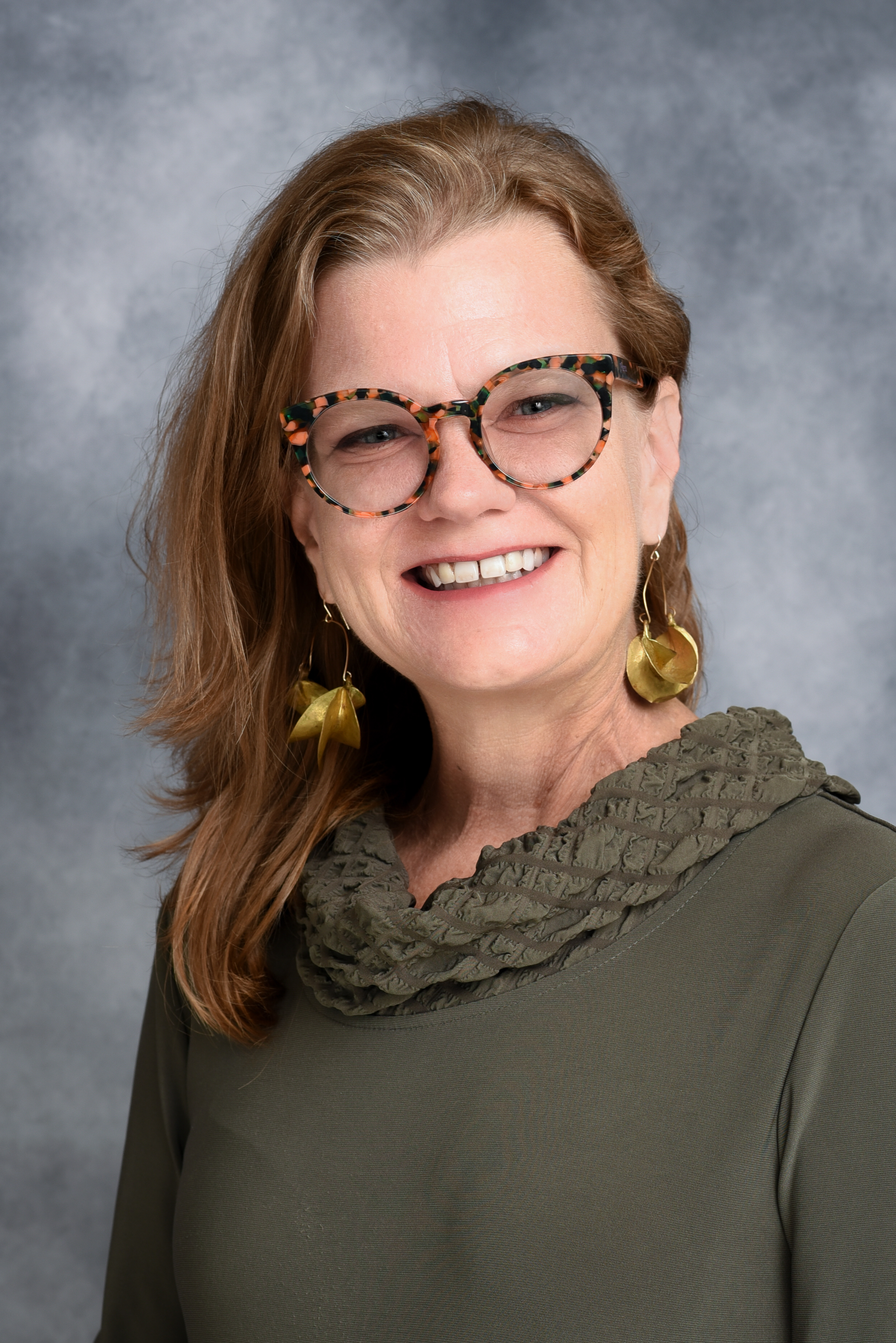
President Rhonda Epper
I’ve been looking forward to this day for quite some time. This is my chance to speak to all of you together, faculty and staff, and to share my goals and priorities for the direction I want to see the university moving over the next few years. But first, I want to recognize a special guest who is really part of our family. He is our former interim president at CSU Pueblo and the future chancellor of the CSU system, Rico. Thank you so much for being here.
The First Few Months
I joined CSU Pueblo in March, and I’ve had many opportunities to meet with you, in groups, individually, and in conversations across campus. These first few months have taught me much about who we are and where we stand. Almost immediately, we confronted difficult realities in our FY27 budget. We made tough decisions that affected people, programs, and positions. Those decisions were not easy, but they showed me something important: this university can come together and make difficult choices when necessary.
Then came commencement, my first chance to celebrate our graduates as president. It reminded me of our purpose: preparing students for meaningful lives and careers.
Summer brought an unexpected challenge. When the Aspen Acres Fire threatened our region, CSU Pueblo became home to the incident command team and, over several weeks, more than 1,700 firefighters and personnel. This put tremendous strain on our campus and our employees. But when our community needed us, CSU Pueblo stepped up. I was incredibly proud of that response. You put forward so much effort and energy, and I want to thank you for that.
Why This Work Matters
Before we talk about challenges and numbers, I want to start with why I believe so strongly in the work we do. This university is an engine for economic mobility. That role is especially important for our region.
Many of our students come from families with limited resources. Many are the first in their families to attend college. They arrive with tremendous talent, ambition, and energy, but many lack the financial resources, networks, or navigational knowledge that other students take for granted. A college degree can alter the economic trajectory of an individual student and an entire family for generations. That is a profound responsibility.
CSU Pueblo supports hundreds of jobs and generates more than $100 million in annual economic activity. Our faculty contribute scholarship and expertise. Our athletic and cultural programs enrich this community. Our graduates become teachers, engineers, nurses, business leaders, and public servants throughout this region. This summer, we saw another dimension of our role as an important part of responding to community need.
We are known as the People’s University for good reason. We are accessible. We are personal. We serve students from a broad range of backgrounds and circumstances. We offer something increasingly valuable in higher education: the opportunity to receive an excellent education in a community where people know who you are.
Operating in a Changing Environment
We operate within a rapidly changing landscape shaped by forces largely outside our control. Federal policy changes have already resulted in the loss of several major grants representing millions of dollars in support for our students and programs. Colorado continues to face substantial budget pressures, and higher education often bears the brunt when state budgets tighten. House Bill 1317 is undertaking significant changes in how higher education is organized in Colorado, with our chancellor, Tony Frank, chairing the transition advisory committee.
We will also elect a new governor this year, which potentially brings additional policy changes. Demographic shifts are changing the population from which we traditionally recruit students. And artificial intelligence is changing education at a pace we still cannot fully predict. Our students need AI literacy. Our faculty have legitimate concerns about preserving genuine learning when students have access to these powerful tools. We don’t have all the answers, but we cannot stand still.
CSU Pueblo has also experienced leadership changes over several years. Some of our current financial vulnerability comes from internal practices that were not sustainable. We have the ability to change that. We can strengthen it. We can make disciplined choices. We can adapt. Whether CSU Pueblo emerges from this period stronger than before depends partly on us.
The Demographic Challenge
Colorado was projected to experience approximately a 12 percent decline in the number of high school graduates between 2023 and 2041. That is significant, especially when we consider that we are already competing for a limited pool of students in a tight market for higher education. Colorado has many higher education providers per capita, so competition is tough and getting tougher. I don’t present this to suggest enrollment growth is impossible. I show it because it tells us that growth will not happen simply because the market is expanding. If we are going to grow over the next decade, we’ll have to earn that growth.
At the same time that the traditional college student population is getting smaller, we face another challenge: fewer Americans believe college is important. Since 2010, the percentage of Americans saying college is very important has dropped dramatically while the percentage saying it’s not too important has grown. There are concerns about cost, debt, and return on investment. Political narratives surrounding higher education are also impacting us. These conversations are happening around kitchen tables. Students and parents are asking: Is college really worth it? When that conversation results in a student deciding no, it has serious consequences for that student and their future.
But here’s what the economic data shows: college still pays. In 2024, the median wage for a college graduate was approximately $79,000. The median wage for someone with only a high school diploma was approximately $47,000. That’s a difference of roughly $32,000 a year. That wage premium has remained remarkably consistent over time despite different economic cycles, changes in the labor market, and technological change. The value proposition exists, but we cannot assume the public understands it. We have to articulate that value more clearly. Equally important, we have to ensure that the education we provide actually fulfills that promise.
Our Enrollment Picture
The good news: our enrollment picture is looking good. Over the last five years, CSU Pueblo has regained a significant portion of the enrollment we lost during and after the pandemic. Our total enrollment has increased from approximately 3,000 students in fall 2022 to approximately 3,500 today. Our first-year enrollment is substantially stronger. Continuing undergraduate enrollment has improved. Graduate enrollment has grown. This progress reflects considerable work across this university and deserves to be recognized.
But leadership requires us to examine the longer-term trajectory. Approximately a decade ago, CSU Pueblo enrolled 4,500 students. We need to hold these two realities in mind simultaneously: our recent trajectory is promising, yet our longer-term trajectory is concerning. This is not unique to CSU Pueblo. Comprehensive universities across the country are experiencing some of the most intense enrollment pressures in higher education. But a national trend for regional comprehensives doesn’t have to define us. We are unique, and how we respond to this challenge is up to us. We have positive momentum now, and our task is to build on it.
Much of our growth since 2019 has come through online education. That expansion was an important strategic move, and that investment has paid off. Online education allows us to reach students who require flexibility and students who would never physically come to our campus. We should continue to strengthen that part of our portfolio. But our on-campus undergraduate population has declined by 11 percent during the same period. This has significant implications.
Our housing, dining, wellness center, and auxiliaries depend upon students physically using those services. We carry substantial base costs associated with our large physical plant regardless of whether 500 or 100 students walk through our buildings. Many of our students benefit from the structure, relationships, accountability, and support available through face-to-face, on-campus learning. Our student athletes are a big part of the vitality of our on-campus culture and who we are.
One of our strengths is our small scale. We can provide a more personalized educational environment than many larger institutions. Our faculty know their students. Students can build meaningful relationships. There’s a sense of community here that’s hard to replicate. Being small is a competitive advantage. But we can’t be too small. We need enough students physically present to sustain a vibrant university community.
I want us to think creatively about rebuilding our on-campus enrollment and making the in-person experience work for students we currently serve and students we want to attract. Many of our courses are offered Monday through Thursday in the middle of the day, which works for full-time traditional students living in dorms but not for someone working 30 or 40 hours a week. Can we offer more programs in the evening, on weekends, and in hybrid formats? That’s a question I’m asking you to consider.
Four Strategic Priorities
Working with our cabinet, our chancellor, and our board of governors, I’m laying out four strategic priorities for the next several years.
1. Enrollment Growth
We’ve established a five-year goal to increase enrollment from approximately 3,500 to 3,750 students. Given the environment I described, that won’t be easy. We need to recruit more effectively, rebuild our transfer enrollment, continue developing online opportunities where they make academic sense and market sense, and make the on-campus experience more accessible.
2. Student Success
It’s not enough to persuade a student to enroll at CSU Pueblo. We have to help those students succeed once they arrive. Our first-to-second year retention rate is approximately 64 percent. We’re losing 36 percent of our students after the first year. Only 26 percent complete their degree after four years, and after six years, that number is still only 42 percent. For racially prioritized students, that number is 36 percent.
I want to be careful about what these numbers mean. Not every student who leaves CSU Pueblo has failed. Some transfer. Some have life circumstances that change. But even allowing for those circumstances, too many students leave without completing the degree they came here for. When students choose this university, they entrust us with something important: their aspirations, hopes, dreams, money, and time. We have a responsibility to create conditions for them to succeed.
We cannot solve our enrollment challenges through recruitment alone. We can work hard to bring new students through the front door, but if we’re losing them just as quickly through the back door, we won’t win. When prospective students coming in behind the ones we’re recruiting today are scarcer, keeping the students who have already chosen us becomes even more important.
We’re beginning a deeper examination of these data. We know one significant point of attrition occurs between second and third year. We need to understand why. Are there different patterns for online students, older students, traditional students? Are there particular academic programs where attrition is high? Are there financial barriers, scheduling barriers, advising barriers? We think under-preparation could be one factor. We may have a bimodal distribution: a large group of well-prepared students and a larger group who are under-prepared. We have to serve all of them, and we need all of them to succeed. It’s possible, even with students who are under-prepared.
We’re moving toward a more integrated student success model, including a one-stop student success hub, a re-envisioned PACT Center, faculty-led advising, enhanced Thunder Wealth 101, and implementation of Navigate. Our five-year goals are ambitious: 70 percent retention, a 40 percent four-year graduation rate, and a 60 percent six-year graduation rate. These numbers represent more than institutional performance measures. They represent students accomplishing what they came here to do.
3. Financial Stability
Most of you lived through our budget process. We held budget forums and communicated with campus throughout. We ended FY26 a little better than FY25 with a net gain of close to $500,000 in E&G funds. But when you look across all of our subfunds, we had a loss. The good news: we had $700,000 less of a loss than the year before. Our immediate goal for FY27 is straightforward: we have to stop losing money.
With the cuts we made for FY27, we’ve corrected some structural deficits and strengthened financial management. We’re aligning our accounting operations more closely with the CSU system. We’re increasing training and accountability for fiscal officers across the university. We’ve tightened spending authority and are reviewing vacancies carefully to ensure any vacant position aligns with our institutional priorities and available resources.
Over the long term, we also need to begin building our reserves. Let me emphasize something important: we cannot cut our way to long-term prosperity. Discipline is essential and will remain essential, but the long-term path to financial strength is growth. Enrolling more students, helping more persist and graduate, developing new partnerships, creating new revenue opportunities, and using our resources with discipline. Financial stability should give us the capacity to make choices about our future and not just react to whatever the latest fiscal crisis is.
4. Career Outcomes and Industry Partnerships
I believe we need to take greater responsibility for helping our students make the transition from education to employment. For too long, colleges and universities have assumed our obligation ends at commencement. We confer the degree, celebrate the graduate, and send them into the labor market. In today’s economy, I believe our responsibility extends further.
Our students need more than credentials. They need experience. They need professional networks. They need confidence and meaningful opportunities to translate what they’ve learned into a career. At the same time, employers tell me they’re struggling to find talented employees. There’s an obvious role for CSU Pueblo to play in bringing these two groups together.
I want us to develop much stronger internship infrastructure. Internships allow students to apply knowledge in professional settings, understand workplace expectations, and begin developing professional identity. They allow employers to see firsthand the talents our students bring. Our small size is a competitive advantage here. In an employment environment increasingly dominated by AI and algorithms, giving our students experience, networks, and relationships may become more valuable. We can provide those relationships through our faculty, alumni, community leaders, and employers.
I want CSU Pueblo to become an indispensable workforce and economic development partner for Pueblo and Southern Colorado. When our region competes to bring a new employer into the area, CSU Pueblo should be part of that conversation from the beginning. We should say: here are programs we offer, here’s the talent pipeline we can build, here’s the training we can provide, here’s the faculty expertise and research we can bring as an asset to your company.
Our faculty are already contributing research and expertise in areas like transportation, engineering, and business. We’re beginning to amplify this work so we can better connect those capabilities with regional needs. Recently, I took a group of faculty and staff to visit the Emergent Campus, a business innovation hub in Fremont County. There was a lot of energy in that room and great ideas. It’s a model we could bring to Pueblo and CSU Pueblo. It’s an engine for internships, new businesses, startups, and potential jobs for our students. We’re exploring great possibilities to make this happen.
Bringing It Together
These four priorities are strategically interconnected. If we improve career outcomes, we strengthen the value proposition we bring to prospective students, which goes to enrollment. We improve retention and graduation, which improves student outcomes and our bottom line. A stronger bottom line gives us capacity to invest in our people, programs, and students. Stronger industry partnerships bring internship opportunities, employment opportunities, research partnerships, and a potential pipeline of students. This isn’t a collection of four separate goals. It’s a strategy for bringing something stronger to our community.
None of these priorities belongs to an individual department. Each of us has a role to play in all four.
What to Expect This Academic Year
Priorities and strategy only become meaningful when they translate into action. Here’s what you can expect to see happening this academic year.
- Launch a more integrated student success model with services and workforce partnerships, paying particular attention to internships and employer engagement.
- Continue fiscal and operational improvements already underway.
- Prepare together for HLC reaffirmation visit in March 2027. Accreditation may not sound exciting, but it’s foundational to everything we do and our ability to deliver on our mission.
- Improve communication and engagement across the university. You’ll see more engagement from me and our leadership team in university and faculty meetings. I’ll hold presidential listening forums throughout the year, and I want to hear from you.
In the short time I’ve been here, I’ve seen from all of you the depth of commitment. I’ve seen it in the ways you serve students, in conversations at commencement, in how people stepped forward during the Aspen Acres Fire, and in conversations with faculty, staff, and community members. I’ve been especially moved by conversations with community members. Someone told me, “President, it makes me great. They really need you to be great.” I thought: yes, I’m going to try my best to be great. But I can’t be great alone. It’s going to take all of us. We have important work to do here. I’m grateful to do this work alongside all of you. I wish you a wonderful semester and a wonderful academic year.