Transportation
Recycled asphalt offers cheaper road repairs for Pueblo County
Students helped test a cold-mix method the county has already used to pave a 0.97-mile road. Presenters shared the work at a transportation conference at CSU Pueblo.
October 28, 2026
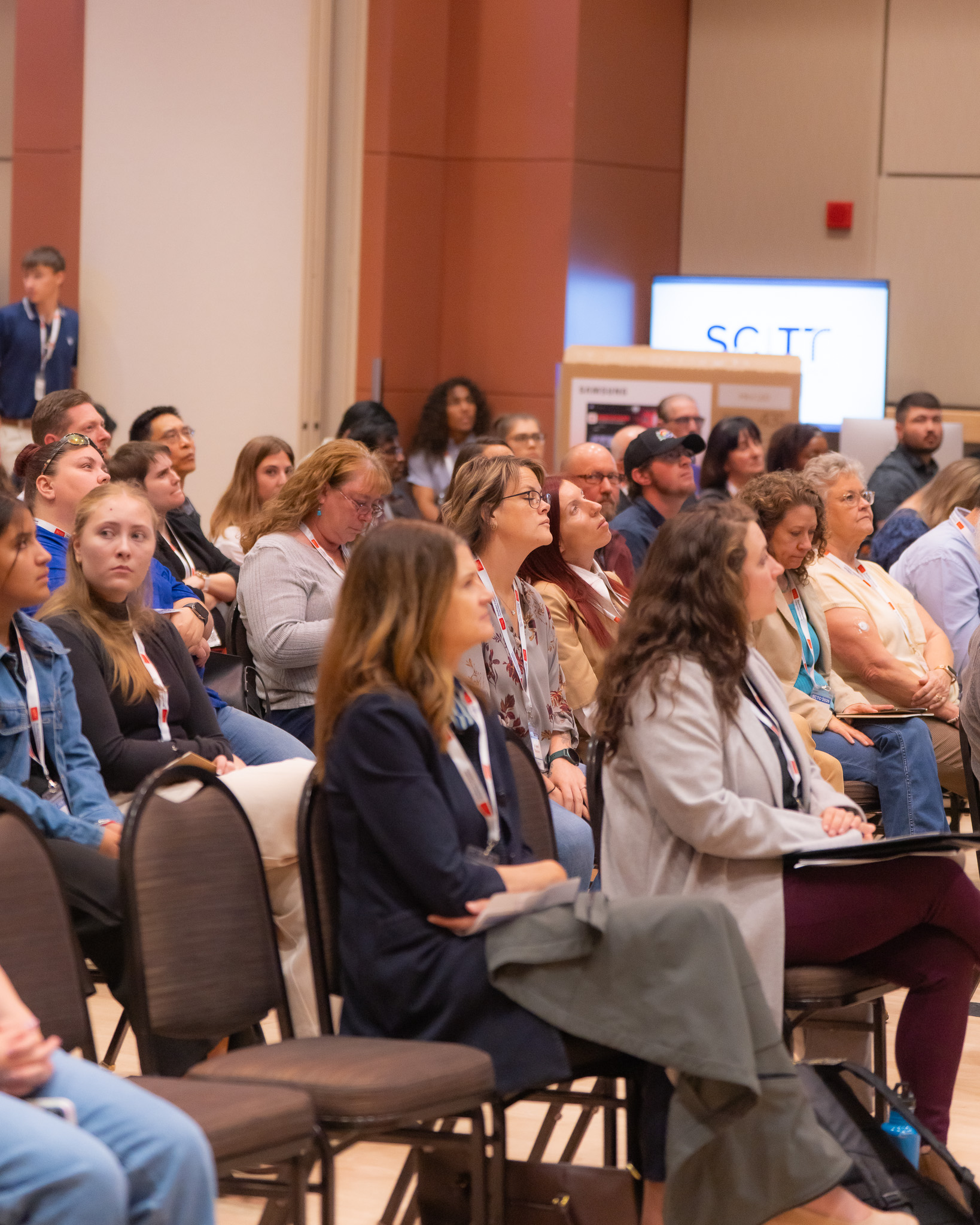
Pueblo County is making cheaper road repairs by reusing old asphalt. Students and researchers at Colorado State University Pueblo helped test the method, which avoids the heat and energy hot mix requires. The team presented its work at the third annual conference of the Southern Colorado Institute of Transportation Technology (SCITT), which drew about 300 people to the university in October.
Hasan Faisal’s team at CSU Pueblo tested reclaimed asphalt pavement, the old surface pulled from aging roads, as a base for cold mix asphalt. Cold mix goes down at ambient temperature, Faisal said, which avoids the energy cost of hot mix heated to 300 or 400 degrees. Lab samples with about 5 to 5.5 percent recycling emulsion passed moisture and freeze tests, according to the team, and they showed strong cracking resistance.
The county has already put the material to work. Pueblo County used it to build Walton Road, a 0.97-mile project now open to traffic. Students trained with Colorado Department of Transportation crews on mixing and sample preparation. Faisal said the collaboration ran nine or 10 months.
Pueblo County inherited about 450 miles of roads in 2022 from developers who built with few standards and little drainage. About 235 miles are paved, many with a thin chip seal over native soil. Gregory George, director of Pueblo County Public Works, said 142 of those miles are chip roads. Crews expect them to become functional gravel within a decade.
George said the county scans its road network every year and feeds the results into a work management system. An algorithm ranks about 3,000 road segments by traffic counts, school zones, hospitals and residential areas. Crews then reclaim the old surface into a new base and pave over it. The county raised its pavement condition index by four points last year. It aims for a gain of 10 to 15 points next year.
“What’s major is managed,” George said.
The one-day conference drew speakers from Colorado State University in Fort Collins, the National Laboratory of the Rockies, public works departments and a private company building magnetic levitation technology in Pueblo.
Debashis Jana, an assistant professor of civil and environmental engineering at Colorado State University in Fort Collins, presented AI-based risk models for roads threatened by wildfire and landslides. His team studied a 120-square-mile road network near Los Angeles. The network has about 8,700 junctions and 20,000 road segments, and it carries about 400,000 trips.
The central question was where to widen roads when public money runs short. Jana said widening every road would cost about $110 million. Spending about $10 million captures nearly 65 percent of the benefit. In a landslide study, the same $10 million reached almost 80 percent of the efficiency of a $35 million plan. Jana also cited figures suggesting Colorado has absorbed $50 billion to $100 billion in hazard losses over the last 47 years.
Qichao Wang, a senior computational transportation scientist at the National Laboratory of the Rockies, described traffic tools his team built over three years from a $200,000 internal investment. Those projects now exceed $20 million in value. One simulation for Dallas-Fort Worth International Airport runs a full day of shuttle operations in about two seconds on a laptop. The airport saved about $1 million in gas over two years. In Chattanooga, Tennessee, a signal system trained on probe vehicle data went live at about 40 intersections.
Dario Buono, chief technology officer of Swisspod, presented a magnetic levitation system the company is developing in Pueblo. The first prototype finished its full test in November 2025, and testing continued into 2026. Private capital is funding a test track about 20 miles from Pueblo, and the track is one-third complete. Swisspod gets steel from Texas and Utah and finishes the tubes in Pueblo, which connects suppliers in two states to production in the city.
Buono estimated magnetic levitation projects cost roughly $500 million per mile. Swisspod plans to lower those costs by simplifying the infrastructure and moving complexity onto the vehicle. Buono invited students to bring their capstone projects to the company.
Buono told the students in the room: “I invite you to bring your ideas. Challenge yourself. Talk to me. Ask me for the track. You do your capstone project in there. Change the future. Do it with us. Bring all of your energy.”

The afternoon featured a poster session, an industry exhibit and workshops in breakout rooms.
SCITT supports research and development across all modes of transportation. Its work also covers safety, workforce development, intermodal logistics and innovation in the public and private sectors. The program offers research on transportation systems, safety and sustainability. It also runs educational programs and training for industry professionals. It works with universities, private companies and public agencies.
—