CSU Pueblo’s six TRIO programs serve 2,472 students across Southern Colorado as Congress considers future of federal funding for the programs.
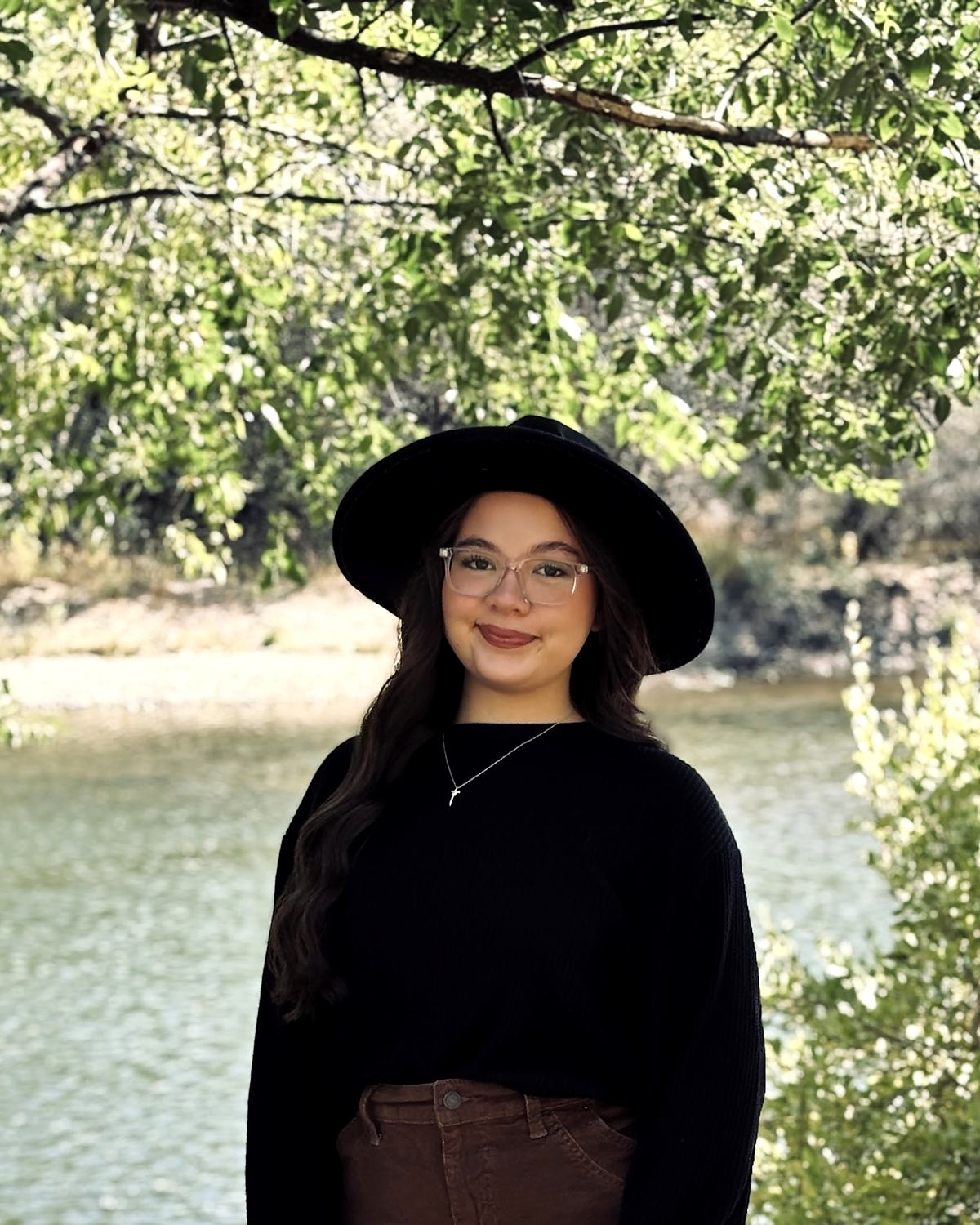
Aaron Cruz joined Upward Bound in eighth grade because of a sign-up flyer and the promise of a trip to Denver. She had no career in mind, and no one in her family had gone to college to show her the way. Through high school, the federal program and its sister program, Talent Search, filled in what her school and home could not. Staff took her to St. Mary-Corwin hospital in Pueblo to practice on patient simulators and encouraged her to try concurrent enrollment at Pueblo South High School. She graduated with an associate degree her family never had to pay for.
Today Cruz is a junior in social work at Colorado State University Pueblo, a member of TRIO Student Support Services, and a work-study student in the Talent Search office, where she now helps the program recruit students the way it once recruited her. College has also taken her farther from home. A TRIO trip to Texas put her on an airplane for the first time.
“Had it not been for the people in TRIO to support me and tell me that if I needed help that they would be there, I don’t think I would’ve ever done it,” Cruz said. “I would’ve been starting just barely right now.”

Whether the same help reaches the next student depends on decisions in Washington, D.C. CSU Pueblo’s TRIO programs have funding through the 2026-2027 school year. Funding beyond that will depend on the federal appropriations process and future grant awards.
In June, the House Appropriations Subcommittee on Labor, Health and Human Services, Education, and Related Agencies released its fiscal year 2027 spending bill. Though the administration’s initial FY 2027 budget requested eliminating funding for TRIO, the House committee rejected the proposal and added $6 million to the budget.
The administration’s budget proposal recommends eliminating federal funding for TRIO, while previous congressional appropriations have continued funding for the programs. Congress rejected the first request. Until lawmakers settle on a full-year budget, a stopgap measure approved in September holds student aid programs at current levels through Dec. 11.
What happens next matters well beyond Pueblo. As Chalkbeat Colorado reported in June 2025, TRIO serves about 870,000 students nationwide, including roughly 17,500 in Colorado, through competitive, multi-year grants totaling $1.2 billion. The administration budget argued the program had missed its performance measures for years and proposed leaving student support to states, colleges, and local officials.
The student who almost didn’t go
Devin Roebuck works in the same Talent Search office as Cruz. Both students graduated from South High in Pueblo, and both came up through Upward Bound and Talent Search, yet the two never met until work-study placed them in the same room. Where Cruz always wanted college, Roebuck spent most of high school sure he did not.
His mother had a different idea. She didn’t finish college and regretted it, so while Roebuck was still in school, she signed him up for Upward Bound and sold him on the free trips. “I was like, ‘All right, bet,’” he said.
The trips did not change his mind right away. Around his home, a degree looked optional, because the people he knew made money without one.
“The kids around me seemed to not really care about it, and the way money was being made around my home at the time, it wasn’t important to have a college education,” he said.
He stayed in the program anyway and kept touring campuses he had no plans to attend. The decision came late, in the months before graduation. “It was about after Christmas break, senior year,” Roebuck said. “I was like, ‘All right, I’ll do it.’” His mother, he added, was thrilled.
High school, by his account, was something to endure. College has turned out to be something else. Now a sophomore in exercise science with a focus on strength and conditioning, Roebuck said a hard semester last spring forced him to decide whether to stick it out. He stuck it out.
“It’s showing me that I could do and learn new things every day,” he said. “The work, meeting new people, talking to new people, that’s the interesting part about it. I learned how to be more resilient.”
A trip to Texas in college, his first time on a plane, gave him a similar jolt. Watching how people outside Pueblo lived and talked, he said, “felt like I was a little kid and this was a new part of a map.” When he pictures a version of his life without TRIO, it stays close to home.

“I probably would’ve gone through high school and then found a blue-collar job or side hustles and online money,” he said. “TRIO really encouraged me to look at education and chase it more compared to everybody else around me.”

What TRIO was built to do
TRIO grew out of President Lyndon B. Johnson’s War on Poverty in the 1960s and takes its name from its first three programs: Upward Bound, Talent Search, and Student Support Services. The support service has since expanded to eight federal programs, six of which operate at CSU Pueblo under Brenda Trujillo-Aranda, the university’s executive director of TRIO programs.
Trujillo-Aranda describes her students by their circumstances. They are first-generation college students, low-income students, students with documented disabilities, veterans, and adults returning to school, and they range from sixth graders to graduate school applicants.
“A lot of people ask us if we’re a minority program,” she said. “I tell them, no, we’re a class program because of our population.”
Each program meets a different point on the path. Talent Search works with 500 middle and high school students, and Upward Bound with 90 high schoolers. On campus, Student Support Services serves 227 undergraduates, while the Ronald E. McNair Postbaccalaureate Achievement Program prepares 25 students for master’s and doctoral programs. The Educational Opportunity Center, the largest of the six, helps 1,505 adults across Southern Colorado with FAFSA forms, college applications, career planning, and job placement. Veterans Upward Bound rounds out the group by readying former service members for college math, English, and placement tests.
Many of those students come from small towns where their parents left school after eighth grade, and Trujillo-Aranda said the office often becomes their first support system. “TRIO becomes like the family in a sense,” she said. She knows the role from the other side. As a first-generation student herself, she arrived on campus wanting to be a helper “because somebody helped me.”
The programs now report to both the U.S. Department of Education and the U.S. Department of Labor, Trujillo-Aranda said, noting that some now see TRIO as “a relic of the past.” She asks that people come and see for themselves.
“Look at our numbers or come and visit us when we’re doing our programming,” she said. “Come and talk to our students or talk to our alumni students and you’ll see what we do to help them.”
Veterans face a firm deadline
For Jacobo Varela, the uncertainty comes with a date attached. Varela directs Veterans Upward Bound, which prepares veterans in Fremont, Pueblo, and El Paso counties for college from offices at CSU Pueblo, Pueblo Community College, and Pikes Peak State College. A five-year federal grant of about $1.5 million covers his staff, equipment, and everything else in the program. The grant ends Aug. 31, 2027.
“If we do not get funded, the program would end,” he said.
The veterans who qualify are low-income, first-generation, or at risk, a category covering those with disabilities and those out of school for five years or more. Many live with PTSD or traumatic brain injuries, and some were once homeless or incarcerated. This semester, 43 veterans in the program are working toward CSU Pueblo. In the last reporting year, 82% of participants enrolled in college, and the program reached 72% on its postsecondary completion goal.
Varela calls the work “high touch.” He meets with each veteran many times, sometimes for months before the person registers for a single class, and many of those meetings have little to do with coursework. He asks whether a veteran has stable housing and enough to eat, because school is the first thing to go when either is missing.
“If it was just getting them enrolled, that’s easy,” he said. “But no, we want to make sure that they are ready for school.”
One veteran he worked with recently needed two years before he felt ready to enroll. He went on to earn a communication degree and is now working toward an MBA. If the grant ends, Varela said, the months of one-on-one casework behind stories like his would disappear first, followed by the tutoring and prep for placement tests and college algebra.
Back where it started
Cruz now sees the program from both sides of the desk, as a student who carried it to college and as a worker helping TRIO reach the next eighth grader. Asked what she would tell the people deciding its future, she kept her answer short.
“It really does help students and supports them in ways that I don’t think anything else really can,” she said. “I know I wouldn’t be who I am today.”